
From the Super Bowl to the World Cup: The Economics of Sports in the United States
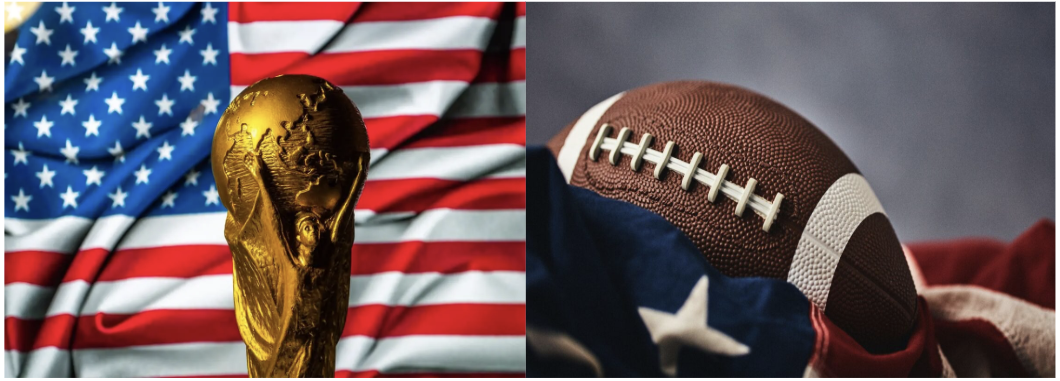
The sports industry, currently the ninth largest globally, generates approximately $2.65 trillion USD annually, and connects people from all walks of life daily (Anani, 2024). The United States continues to dominate the industry with the National Basketball Association (NBA), National Football League (NFL), and Major League Baseball (MLB), among others, generating around 40% of revenue for the industry ($1.06 trillion USD) (Anani, 2024). These leagues stimulate the American economy, with effects permeating beyond the entertainment industry, to tourism and hospitality. These enterprises, particularly the NFL with the Super Bowl and NCAA College Football, along with the NBA and MLB, are large contributors to the US economy, so with the 23rd edition of the FIFA World Cup being held in the United States in 2026 (alongside Canada and Mexico), a nation where soccer is not a dominant sport, what does this mean for the economy of major American cities that are set to host games?
Before taking a look at the 2026 World Cup, it is valuable to explore the economics of American sports and how they can introduce pressures for cities, but are also linked to economic stimulation .
On the 19th of January, the Indiana Hoosiers (Indiana University) faced the Miami Hurricanes (University of Miami) at Hard Rock Stadium in Miami, Florida, for the College Football Playoff National Championship. The tournament received support from millions of fans across the country, with the finals hosting just shy of 70,000 fans (Greif, 2026). It is estimated that this match alone generated over $264 million USD for the city of Miami, contributing to the projection that the city will experience “a $3 billion economic boost in 2026 from nearly a dozen major sporting events[,]” and Mayor Francis Suarez stating that “seven matches later this year will rake in an estimated $1.5 billion” (Altus, 2026).
College Football is not the only rendition of the sport that has substantial economic influence in the United States. The NFL dominates American sports, generating around $18.7 billion. Indeed, Neufeld (2024) found that it “significantly outpac[es] both the NBA and MLB, which each brought in $10.9 billion” on average from 2022 to 2023 (Neufeld, 2024). The Super Bowl, the NFL’s flagship event, consistently has an audience of over 100 million fans, with the 2025 Super Bowl seeing a record of 127.7 million viewers, peaking at 137.7 million in the second quarter, a 3% increase from the previous year (NFL, 2025). Although not as high as previous years, the 2025 Super Bowl in New Orleans had roughly 100,000 visitors from outside of the state, resulting in 96.5% of hotel rooms in the city being booked during the weekend of the game (Graber, 2025). Louisiana natives, along with these visitors, contributed a significant amount to the economy of New Orleans, and although it is hard to estimate to what degree, it is evident that businesses in the city generated notable amounts of revenue from the weekend. The 2026 Super Bowl is set to be played on February 8th, 2026, in Santa Clara, California, after years of planning spearheaded by San Jose Mayor Matt Mahan (Dorsey, 2026). It is evident that “American Football” is not only a sport, but an economic powerhouse for the nation, so how will “European Football,” or “soccer,” benefit the nation in the summer of 2026? Soccer is currently the most popular sport in the world, with an estimated 3.5 billion fans worldwide (Singh, 2025). The American cities set to host the 2026 FIFA World Cup include Atlanta, Foxborough (Boston), Arlington (Dallas), Houston, Kansas City, Inglewood (Los Angeles), Miami, East Rutherford (New York City), Philadelphia, Santa Clara (San Francisco Bay Area), and Seattle (FIFA, 2026). FIFA estimates that the 2026 World Cup will be the “most lucrative sports event ever staged,” with FIFA’s revenue to top $10 billion USD potentially, and estimates suggesting that the U.S. GDP will increase by approximately $17.2 billion USD (Slater, 2025). This growth is not only a representation of how stadiums will benefit from ticket purchases, but also substantial increases in consumer spending, job creation across such as tourism and hospitality, food and beverage, transportation, retail, entertainment, and construction.
The sports industry, chiefly football, is currently built into the American lifestyle, promoting a plethora of economic sectors, notably through high-revenue events, such as the Super Bowl and College Football Playoff National Championship. The 2026 FIFA World Cup, projected to be one of the largest sporting events globally to date, and it is expected to provide the United States with significant economic benefits that potentially extend beyond next summer, and are likely to stimulate growth in the foreseeable future. From American Football to European Football (soccer), the economic implications of sports in the United States are pronounced.
Sources:
Altus, K. (2026, January 19). Miami eyes massive $3B sports economic boost as Trump expected to attend college football championship. Fox Business. https://www.foxbusiness.com/economy/miami-eyes-massive-3b-sports-economic-boost-trump-expected-attend-college-football-championship
Anani, Z. (2024, July 23). The true size of the global sports industry. Gis.sport. https://gis.sport/news/the-true-size-of-the-global-sports-industry/
Associated Press. (2025, February 11). Super Bowl LIX Averages Record Audience of 127.7 Million Viewers. NFL.com. https://www.nfl.com/news/super-bowl-lix-averages-record-audience-of-127-7-million-viewers
Conte, N. (2024, July 23). Visualized: How U.S. Sports Leagues Make Money. Visual Capitalist. https://www.visualcapitalist.com/u-s-sports-leagues-by-revenue/
Dorsey, D. (2026, January 6). Super Bowl 60 preparations begin in Santa Clara, San Jose 1 month before football’s biggest event. ABC7 San Francisco. https://abc7news.com/post/super-bowl-60-preparations-begin-santa-clara-san-jose-1-month-before-nfls-biggest-event/18357458/
Graber, J. (2025, February 6). Super Bowl LIX set to boost New Orleans hotels. Hotel Dive. https://www.hoteldive.com/news/super-bowl-new-orleans-hotels/739439/
Montenegro, U. S. M. (2024, October 3). The Excitement of American Football - U.S. Embassy in Montenegro. U.S. Embassy in Montenegro. https://me.usembassy.gov/the-excitement-of-american-football/
News, N. (2026, January 19). CFP championship live updates: Indiana defeats Miami 27-21 as Cignetti leads IU to undefeated season. NBC News. https://www.nbcnews.com/sports/college-football/live-blog/indiana-miami-cfp-championship-watch-live-updates-rcna253926
Singh, A. (2025, February 20). The Most Popular Sports In The World. WorldAtlas. https://www.worldatlas.com/articles/what-are-the-most-popular-sports-in-the-world.html
Slater, M. (2025, June 11). FIFA revenues projected to surpass $10bn with 2026 World Cup. The New York Times. https://www.nytimes.com/athletic/6417221/2025/06/11/fifa-2026-world-cup-revenue/
VisasNews. (2024, September 19). World Cup 2026: hurry up and apply for your US visa! VisasNews. https://visasnews.com/en/world-cup-2026-hurry-up-and-apply-for-your-us-visa/
(2024). Fifa.com. https://www.fifa.com/en/tournaments/mens/worldcup/canadamexicousa2026