
The Fragility of Monetary Independence
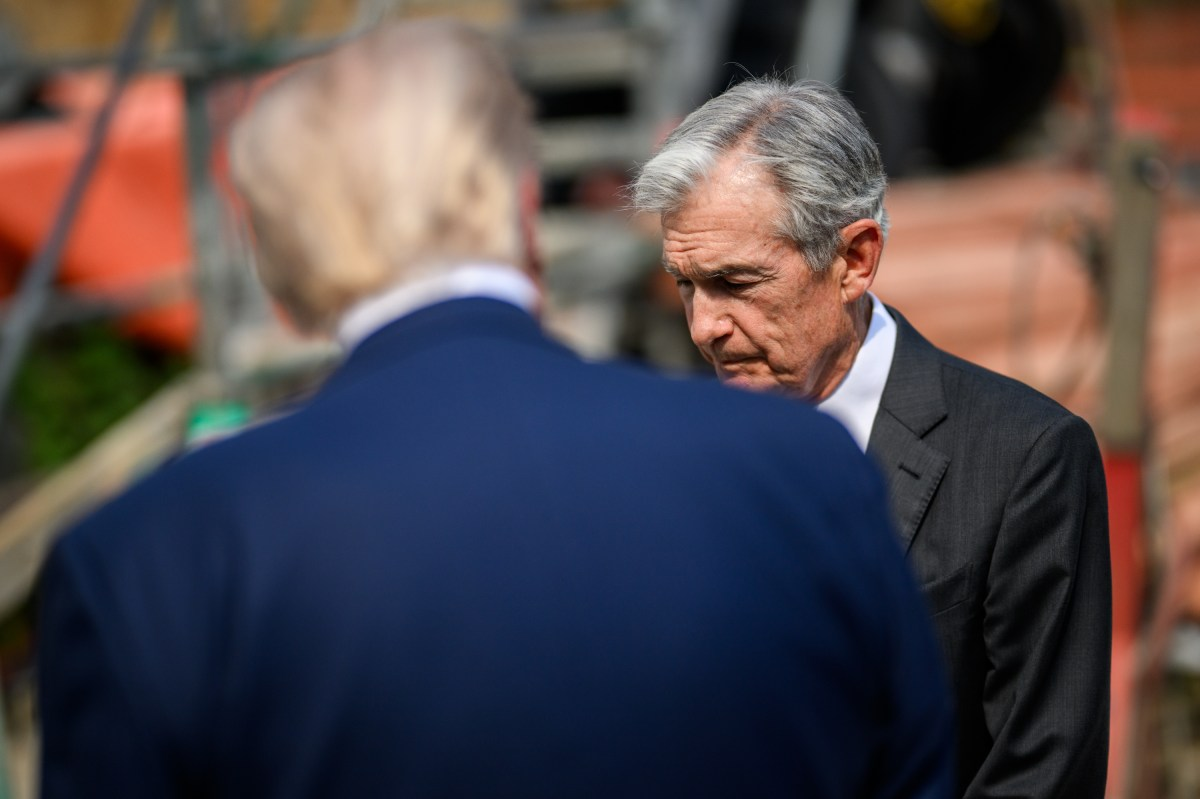
President Donald Trump speaks to Fed Chair Jerome Powell during a tour of the Federal Reserve in Washington, D.C. 2025 (Wikimedia commons)
In late 2025, concerns over the transparency of a major renovation project at the Federal Reserve unexpectedly underscored the economic importance of central bank independence.
Donald Trump’s Department of Justice has opened an unresolved criminal investigation against Jerome Powell, the chair of the Federal Reserve, for allegedly making false statements to Congress about a renovation of the Federal Reserve’s headquarters in Washington, D.C., costing an estimated 2 billion dollars. Trump argued that the Federal Reserve had not been sufficiently transparent in its communications with Congress regarding the scope and cost of the project.
In response, Jerome Powell released a video in which he rejected the accusations and furthermore suggested that Trump’s legal threat was a broader strategy of political pressure aimed at weakening the independence of the Reserve.
In the video, Powell said: “The threat of criminal charges is a consequence of the Federal Reserve setting interest rates, based on our best assessment of what will serve the public, rather than following the preferences of the president” Powell, J. (2025). Public video statement. Federal Reserve. Powell’s claim suggests that the controversy surrounding the renovation is secondary to a deeper institutional conflict: whether monetary policy should respond to economic conditions or to presidential preferences.
This recent episode raises a broader economic question: Why is maintaining a clear division between political power and monetary policy regarded as essential?
Central bank independence means that it can set monetary policy (move interest rates, money supply, control inflation ), without direct political interference from the president or Congress. However, independence does not mean the absence of political accountability. For instance, the Chair of the central bank is nominated by the President and confirmed by Congress.
There are several reasons why the Federal Reserve is designed to operate at a distance from political authority.
One key reason is that political and economic objectives often differ: governments tend to prioritize short-term growth, low unemployment now, and visible results within a political cycle. While monetary policy wants stability over time and long-term credibility. This tension is known as the time inconsistency problem, which makes short-term political incentives incompatible with long-term monetary stability. The influence of the government would cause higher inflation, lower credibility, and increased borrowing costs in the future.
Another key reason is that monetary policies rely heavily on credibility. If households and firms believe that political pressure will influence monetary decisions, inflation expectations can increase even in the absence of any immediate policy change, making the economy more difficult to stabilize.
The idea that the Central Bank’s credibility improves economic performance is supported by international empirical evidence from the European Central Bank’s analysis of155 central banks for 50 years. Countries with more independent central banks have historically experienced lower average inflation, fewer inflationary crises, and more stable long-term growth.
Yet, this autonomy is never absolute: central banks remain embedded in political systems, depend on legal frameworks, and ultimately rely on public trust. For this reason, monetary autonomy is not a permanent achievement but a continuously maintained institutional balance, vulnerable to political pressure.
This recent episode illustrates this fragility, and it is why Jerome Powell and the Federal Reserve publicly denounced what they described as a strategy of political pressure.They warned that such actions, referring to the threat itself, risk weakening monetary independence and its effectiveness.
Sources:
https://www.ecb.europa.eu/press/blog/date/2025/html/ecb.blog.20251223~aad70ce537.en.html
https://www.cbc.ca/news/world/jerome-powell-federal-reserve-indictment-threat-9.7041699
Why Central Bank Independence Matters – in Crisis, in Recovery, and Beyond 75th Anniversary Oration of the Central Bank of Sri Lanka by Governor Dr. Nandalal Weerasinghe 29 August 2025
President Donald Trump speaks to Fed Chair Jerome Powell during a tour of the Federal Reserve in Washington, D.C., Thursday, July 24, 2025. (Official White House Photo by Daniel Torok) https://www.federalreserve.gov/newsevents/speech/powell20260111a.htm