
The $50 Billion Diet: What Happens When Profit is Prioritized Over Public Health?
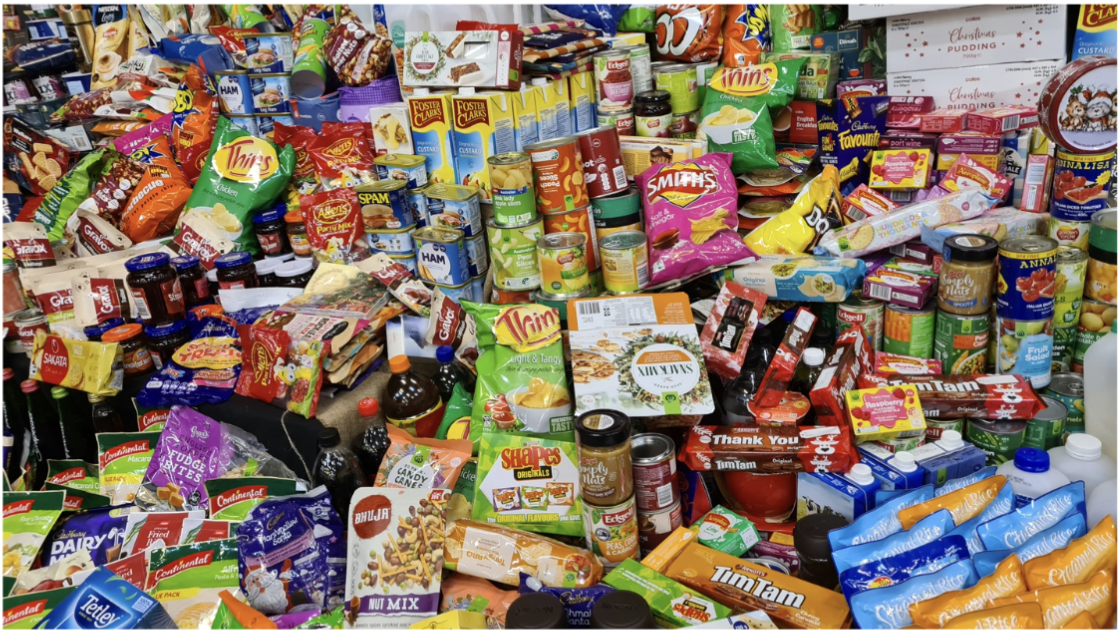
“Eat healthy, exercise daily.” This is the motto drilled into Americans to promote healthy choices. But what happens when Americans can’t eat healthy? What happens when the only affordable food on the shelves is riddled with 10+ ingredients that are unpronounceable, unrecognizable, and even toxic? What happens then is that a poor diet causing 18.3% of cardiometabolic diseases in the USA, costing the healthcare system $50 billion annually. Though corporations try to push blame onto individuals by framing diet-related diseases as a personal failure to ‘eat healthy’ and restrict oneself, it is becoming increasingly clear that Big Food (specifically the handful of corporations that control the food Americans eat) is the next Big Tobacco, exploiting the health of consumers for profit. This article will define what ultra-processed foods (UPF) are and how they came to make up 60% of America’s diet and corporate p how they slid past regulations to end up on our plates despite their documented detrimental effect to our health.
In his book “Ultra-Processed People,” Dr. Chris Van Tulleken says we have entered a new ‘age of eating’ where companies employ ultra-processed foods, foods that are industrially processed to a point where they no longer resemble their origin, namely emulsifiers, stabilizers, artificial sweeteners, and harmful dyes. These products are engineered to make food more palatable, addictive, and at times even toxic. These ingredients have come to dominate the food industry, appearing firstly in foods that are understood as ‘unhealthy’ such as fast food, potato chips, and pop but increasingly make their appearance in foods that define many American’s diets and are often marketed as healthy such as breakfast cereals, deli meats, plant based alternatives, sauces and condiments, and frozen/ready to eat meals. The industrial hyper-processing of these foods is what causes their harmful effects, as they are difficult for our bodies to properly digest them and we often overeat due to their addictive properties.
A systematic review and meta-analysis combining through 85 studies revealed that high UPF consumption increased the risk of obesity, all-cause mortality, type 2 diabetes, depression in adults, irritable bowel syndrome, and breast cancer. Beyond the direct costs of disease caused by a poor diet, there are costs caused by lost productivity from absenteeism (missed working days) and presenteeism (lower productivity rates while at work). The indirect costs of type 2 diabetes and cardiovascular disease, 18.3% of which are estimated to be directly linked to poor diet, are $100 billion and $138 billion, respectively.
Despite their documented harm and detrimental effects on the human body, UPFs dominate the aisles in grocery stores. This is no mistake. Corporations have discovered the high arbitrage potential for UPFs and used it to ensure that these products stay on the shelves. According to new research done by The Lancet, between 1962 and 2021, more than 50% of what food companies paid to shareholders derived from UPF manufacturers alone. Estimates are that annual UPF sales are over $1.9 trillion USD per year. By hyper-processing their products to make food that is palatable, convenient, and cheap for consumers, food companies bypass traditional barriers to profit in the food industry. Corporations that do not provide products with extended shelf-life that are accessible everywhere and are flavor-engineered to trick consumers into addiction and overeating are unable to keep up with corporations that do.
Beginning in the 1980s, a wave of government inaction, corporate mergers, and deregulation undid the efforts of the decades of antitrust laws that kept American agricultural markets open, competitive, and fair. Today, only a handful of corporations oversee the food that Americans eat, from the initial stages of its growth to the time it is served on a plate, and these corporations' grip on power is airtight. Oligopolistic competition has taken over the seed, fertilizer, farm machinery, beef packaging, and grocery markets with disproportionate market distribution, such as 85% of beef packers being controlled by a mere four corporations. This extreme concentration gives these corporations outsized political power. For an industry that spends spending $1.15 billion on lobbying annually, compared to the $817 million spent by the gambling industry and $755 by Big Tobacco, it is unsurprising that corporations have successfully convinced governments that they are essential to discourse surrounding both the present and future of food systems. Behind the scenes, corporations have tightened their hold on power through lobbying power and the ‘revolving door’ political strategy of hiring former officials from public administration boards such as the Food and Drug Administration (FDA), U.S Department of Agriculture (USDA) to private corporations so that insider knowledge can be shared and regulatory predictability can be achieved. These corporations, namely, Coca-Cola, General Mills, PepsiCo, and Mars, gain and maintain the public's trust by funding and publishing studies pointing to the safety and nutritional benefits of their products. A popular way to obfuscate science and encourage consumer demand for UPF products is for executives of major UPF companies to either found or act as board members for a Research council that publishes ‘scientifically based nutritional information.’ For example, a research group called the International Life Science Institute, which states on its website that “scientific integrity is essential to developing sound science that benefits society” (ILSI website, 2025), was founded by Dr. Alex Malaspine, who was a former senior vice president of scientific and regulatory affairs at Coca-Cola. Similarly, the International Food Information Council (IFIC) board of directors is composed of PepsiCo, General Mills, and Hershey executives. IFIC is widely cited in the media, spending around $5 million a year on research that promotes and defends sugar, UPFs, artificial sweeteners, genetically modified foods, and pesticides.
Ultra-processed foods did not come to dominate the market by mistake or accident. Their popularity is a predictable outcome of the food industry’s corporate takeover and systemic suppression of science and policy. Since UPFs are engineered for profit at the expense of public health–disproportionately affecting lower and middle income Americans– the only way to cut demand is to regulate the supply. This calls for stronger transparency laws, regulations against the corporate revolving door, independent nutrition research, and limits on lobbying. Reclaiming the food available to us, and therefore our own health, is possible if public health is prioritized over corporate profit.