
The Costco Microeconomy
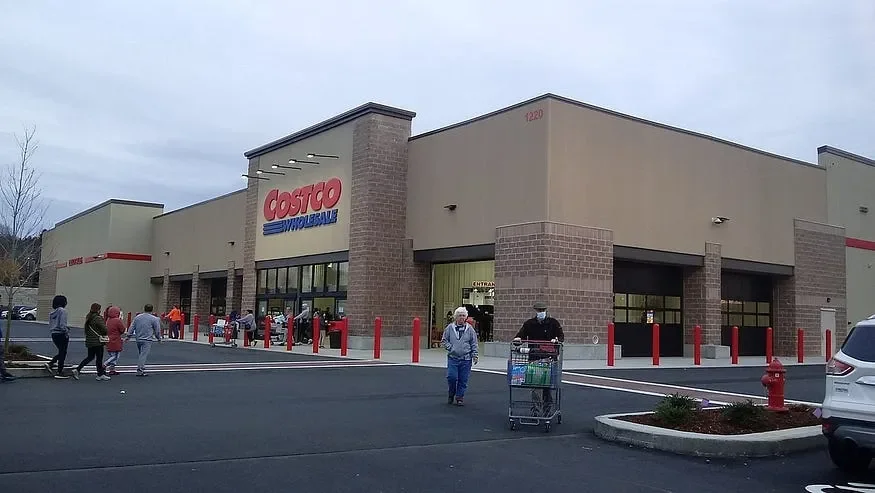
Jacob Blanck, via Wikimedia Commons
Thinking about where to go grocery shopping? It’s likely some external actor has already made that decision for you. Costco’s unique business approach attracts consumers in ways that have a tangible effect on the local economy.
For context, when a big box retailer like Walmart opens within a local area, their huge economies of scale and unmatched pricing power force out smaller local competitors. The rate of business closures materially increases in areas surrounding a new Walmart location, leaving Walmart as the only employer in town, allowing them to push local wages down. Economists have simply coined this as the Walmart effect.
It is reasonable to assume a similar effect would arise from the placement of a Costco in a local economy, considering both chains are large variety operations that compete by offering lower prices. Yet, the recorded effect of a Costco opening is almost exactly the opposite. In 2023, Costco opened a branch in GMA about an hour outside Tokyo. Similar to the rest of Japan, this area was not immune to wide economic stagnation and wage suppressions. The local businesses in this area were running on razor-thin margins with a diminishing customer base. This all changed when a Costco was built.
The first thing that changed was local wages. Costco has traditionally paid its entry-level staff very well, contrasting with Japanese employers who hadn’t given broad pay rises since the 1990s. In GMA, people could work for the Yen equivalent of $6.50 an hour in local stores, farms, or warehouses, or they could get a job at Costco, which offered a starting salary of $10 an hour. Reasonably, local labor shifted toward the firm with higher wages, but this resulted in local businesses being forced to raise wages in order to keep running. Within the first 3 months after the Costco opened, local businesses reported paying their staff 40% more than they had previously.
Remember earlier when I said these businesses were running on razor-thin margins? You may wonder how they are affording these higher wages. Unlike when Walmart or similar large retailers open, Costco stores become destinations that attract shoppers from a much wider area than just serving the immediate community. A trip to Costco is something an average shopper plans for in advance and doesn’t do nearly as frequently as going to an average retailer. So, for an out-of-the-way town like GMA in Japan, Costco acted like a magnet, attracting people from more populated areas to come do their shopping. After driving more than an hour away, shoppers were further motivated to make a day of it and have lunch at a local restaurant or get their hair cut at the local barber. The result wasn’t the hollowing-out pattern we associate with Walmart, but something closer to a local boom: more traffic, more demand, and, crucially, better-paying jobs.
Costco’s impact on wages isn’t an accident or an act of corporate charity. It’s part of a deliberate microeconomy the company builds around each warehouse. Wages are the first hook, but they’re not the only one. Once an employee signs on, Costco starts quietly buying their loyalty.
Membership is the perfect example. For most of us, buying a membership is the price of entry to the cheap rotisserie chicken and pallets of toilet paper. For Costco employees, that membership is heavily discounted or free. It sounds small, but think about what it means: your employer gives you direct access to the same low prices you’re helping to provide. Every paycheck stretches further inside the store you work in. Your job isn’t just wages; it’s cheaper groceries for your family, cheaper gas, cheaper glasses, cheaper prescriptions. In GMA, where everyday costs were already tight, that mattered.
On top of this, Costco layers other loyalty tools: relatively stable schedules, paid time off, and a clear path to promotion for people who stay. Supervisors and managers are often drawn from the shop floor, so workers see a future for themselves if they stick around. That’s very different from the standard big-box formula where jobs are treated as disposable and turnover is just “the cost of doing business.”
All of these factors—higher wages, tangible benefits, and visible promotion ladders—change the incentives facing workers. Quitting for a slightly higher wage at a rival store now means giving up your membership perks, your seniority, and your chance at a better role next year. In practice, Costco doesn’t just buy labour for an hour at a time; it buys commitment. That commitment shows up in lower turnover, experienced staff who actually know the products, and a warehouse that runs smoothly even when it’s swamped with weekend shoppers.
Zoom out, and the Costco microeconomy looks like this: the warehouse pulls in customers from far beyond the town, those customers spill over into local businesses, local employers are forced to raise wages to compete, and workers who land a Costco job enjoy not just a paycheque, but a bundle of perks that tie them to the firm. Instead of suppressing wages and draining life from the main street, the warehouse becomes an anchor that can nudge the whole local economy onto a slightly better path.